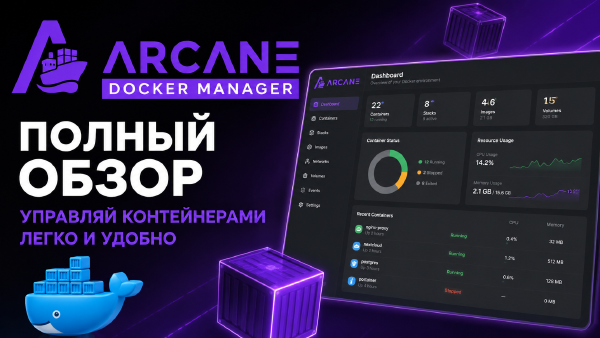
An overview of Arcane - a young but fast-growing web interface for Docker - and a step-by-step guide to installation, configuring secrets, connecting existing compose projects, and basic socket protection.
ProHomeLab is open to authors who want to share their knowledge and practical experience in the world of homelabbing.
If you’re building your own home infrastructure, experimenting with servers, virtualization, containers, networking, NAS, monitoring, or automation, I’d love to feature your experience on the site.
It doesn’t matter how big your home lab is. What matters isn’t the number of servers in the rack, but real experience, interesting solutions, and knowledge worth sharing with others.
What you can write about # The topics ProHomeLab covers are fairly broad. For example:
Part three of the Traefik-in-LXC series - installing CrowdSec in the same container as Traefik itself. Scenario collections, a remediation profile with Gotify notifications, log sources (Traefik, syslog, AppSec), and wiring the bouncer plugin back into Traefik.
Middleware is the second most important building block of Traefik after routers. In this article I break down what it is, why it’s needed, how it’s applied, what a chain is, and I go through all the middlewares from the open-source version of Traefik with the configuration examples I use myself.
Continuing the series about Traefik in LXC - from a test binary to a working configuration. Cloudflare token, final static config, wildcard certificate, dashboard protection via Basic Auth, log rotation, dynamic config structure, and migrating a dozen services from Docker labels to the file provider. CrowdSec is planned as a separate follow-up.
A detailed guide to installing and configuring Traefik in an LXC container to set up a reverse proxy. Covers Docker setup, routing configuration, SSL integration, and recommendations for managing web traffic.
A rundown of 36 Obsidian plugins that replaced Trilium Notes’ built-in functionality after the move - from Templater and Bases to Excalidraw and Kanban. I compare the philosophy of the two systems and explain why the deciding factor was YAML Front Matter support for publishing articles via Hugo.
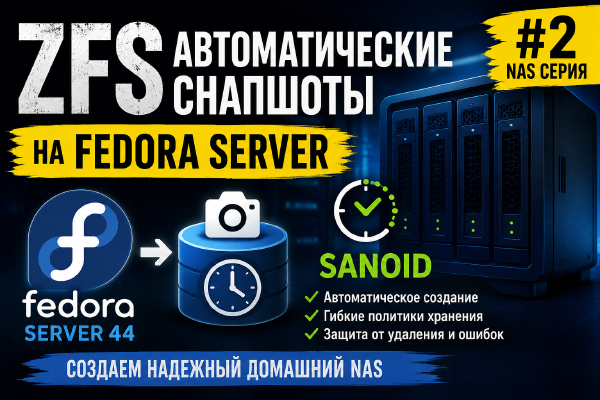
Continuing the series of articles about a home NAS on Fedora Server 44. This time we set up automatic creation and cleanup of ZFS snapshots using Sanoid, go over the snapshot retention policy and systemd timers, and get acquainted with Syncoid for future data replication to a backup server.
We build a modern home NAS on Fedora Server 44 with the OpenZFS filesystem, the Cockpit web interface, and the Samba file server. A complete step-by-step guide to installation, ZFS configuration, SELinux, and publishing an SMB share.
A complete guide to installing and configuring Proxmox Backup Server 4.2.0 for building a reliable backup system for Proxmox VE virtual machines and containers.
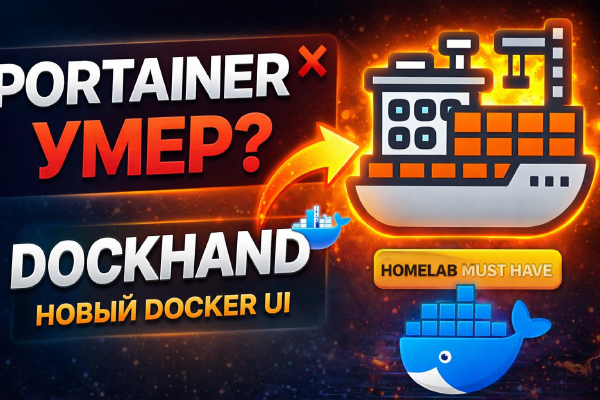
A complete guide to installing and configuring Dockhand - a simple and convenient web UI for managing Docker containers in homelab and production environments.
NetBird turns your devices into one private mesh network and, more recently, doubles as a reverse proxy - so home services go public without a single open port on the router.
Pangolin lets you publish local services to the internet without opening ports, using secure tunnels and a convenient web interface - an ideal solution for a home server and homelab.
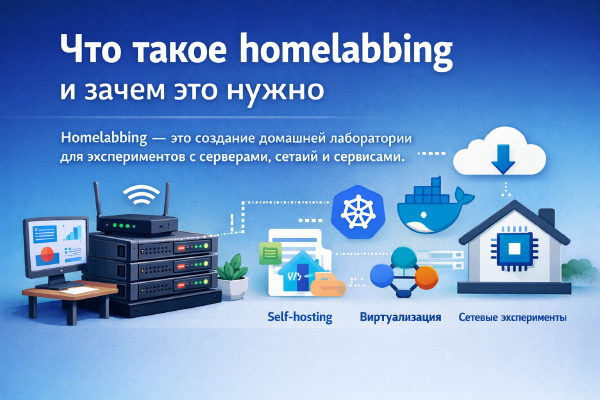
Homelabbing is building a home lab for experimenting with servers, networks, and services. It helps you learn technologies, test new solutions, and develop practical IT skills.
A detailed overview of Authentik - an open-source system for centralized authentication and authorization (IdP/SSO). We’ll cover why IAM solutions are needed, the architecture, key features, and a comparison with alternatives.
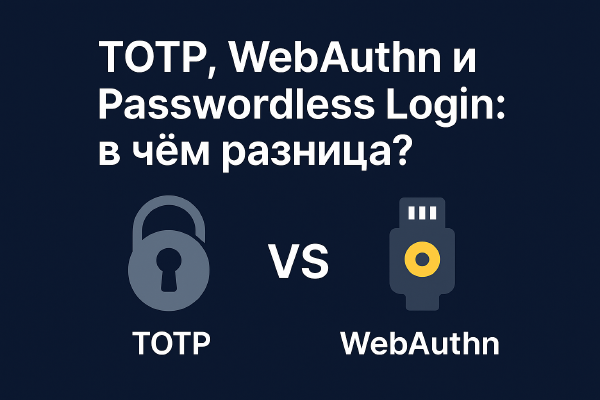
A detailed look at TOTP, WebAuthn, passkeys, and Passwordless Login: how they work, their strengths and weaknesses, and recommendations for choosing the right technology for logging into your services.
A step-by-step guide to installing and configuring Authelia in Docker - deployment, 2FA configuration, Traefik integration via forwardAuth, and a breakdown of the main config parameters.
A step-by-step guide to installing and configuring Zitadel for two-factor authentication behind a reverse proxy. Covers user configuration, Docker integration, and recommendations for improving the security of web services.
A step-by-step guide to installing and configuring Keycloak for SSO and two-factor authentication behind a reverse proxy. Covers the Docker Compose configuration, first login to the admin console, creating a realm and a client, and recommendations for improving security.
An overview of the advantages and disadvantages of virtualizing a router (OPNsense, pfSense, MikroTik CHR) in Proxmox VE - when it’s worth it and when it’s better to keep dedicated hardware.