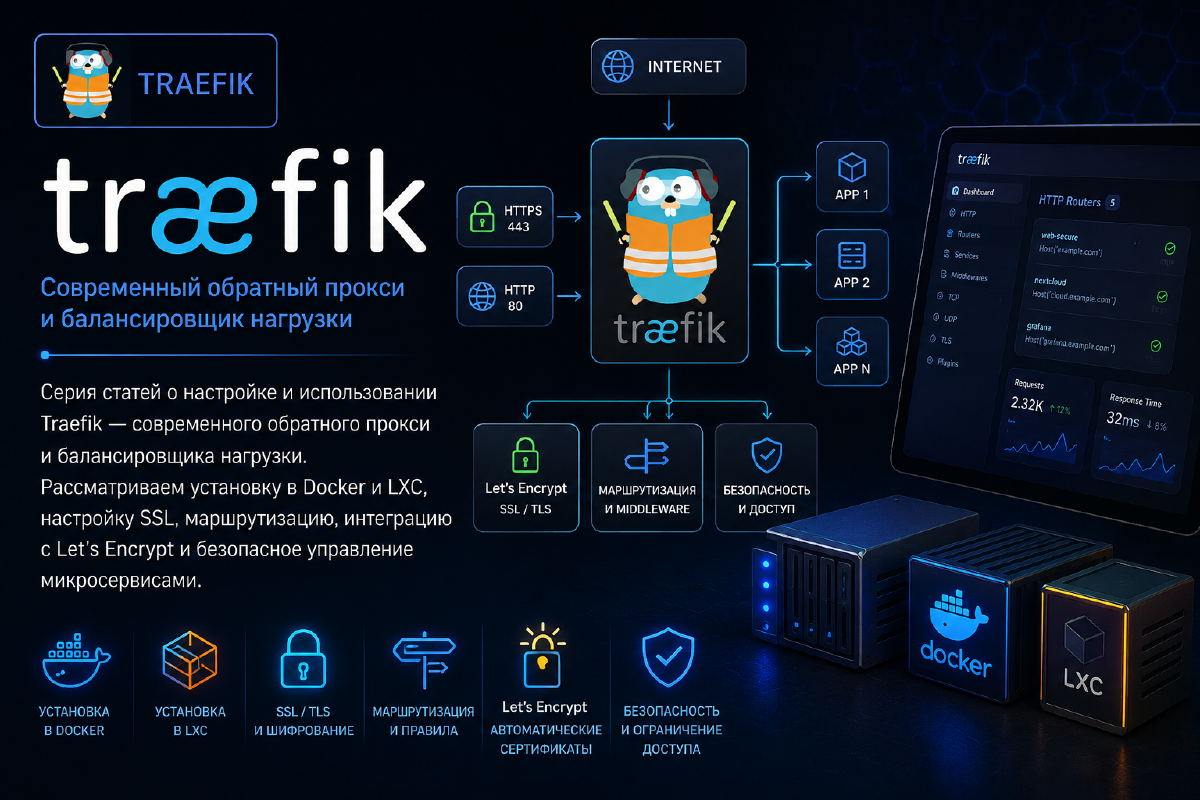
A series of articles about setting up and using Traefik - a modern reverse proxy and load balancer. We cover installation in Docker and LXC, SSL configuration, routing, Let’s Encrypt integration, and secure microservice management.
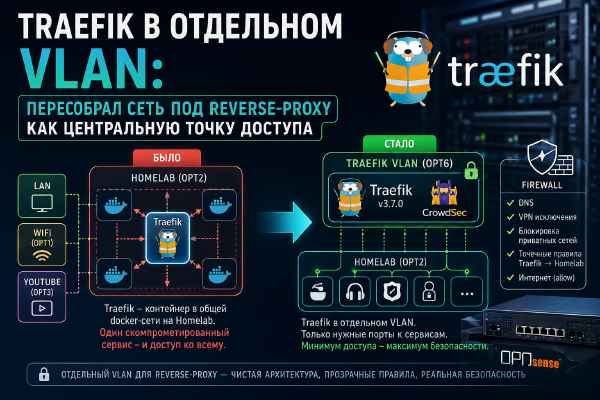
I’m moving Traefik to a dedicated VLAN and restructuring my homelab network architecture: the reverse proxy becomes the central access point to services, while OPNsense controls network access between VLANs.
Part three of the Traefik-in-LXC series - installing CrowdSec in the same container as Traefik itself. Scenario collections, a remediation profile with Gotify notifications, log sources (Traefik, syslog, AppSec), and wiring the bouncer plugin back into Traefik.
Continuing the series about Traefik in LXC - from a test binary to a working configuration. Cloudflare token, final static config, wildcard certificate, dashboard protection via Basic Auth, log rotation, dynamic config structure, and migrating a dozen services from Docker labels to the file provider. CrowdSec is planned as a separate follow-up.
Middleware is the second most important building block of Traefik after routers. In this article I break down what it is, why it’s needed, how it’s applied, what a chain is, and I go through all the middlewares from the open-source version of Traefik with the configuration examples I use myself.
A detailed guide to installing and configuring Traefik in an LXC container to set up a reverse proxy. Covers Docker setup, routing configuration, SSL integration, and recommendations for managing web traffic.
A step-by-step guide to installing and configuring Traefik in Docker to set up a reverse proxy and manage web traffic. Covers container configuration, routing, SSL integration, and recommendations for managing web services.