
Open Source
Homelab News, November 21-27 - Proxmox VE 9.3, Traefik 3.8, and a Docker Security Fix
Also available in: RU
Part 2 of 2 in the series News
- Open Source in Crisis - Key Events of 2025
- Homelab News, November 21-27 - Proxmox VE 9.3, Traefik 3.8, and a Docker Security Fix
Contents
If you're setting aside some time for homelab maintenance this weekend, I'd start with Docker Engine and FreshRSS. Both shipped security fixes, and FreshRSS also changed how password sign-in works and which PHP versions it supports. There's more to look forward to in Proxmox and Traefik, especially if you've been waiting for LVM snapshots you can use in production or finer control over proxy timeouts. Here's what shipped from November 21 to 27 and what it means for your setup.
Proxmox VE 9.3 - LVM snapshots and package history in the web UI
Proxmox VE 9.3 came out on November 25. Volume-chain snapshots on thick-provisioned LVM are now supported for production use. You can enable them in the storage's advanced settings. If you run a cluster with a storage area network (SAN), the new cluster-wide view shows the state of your storage paths across all nodes and lets you set up multipath from the web UI. Proxmox VE 9.3 announcement
On a single node, APT History is the feature I'd look at first. If something breaks after a routine update, you can see which packages changed without leaving the web UI. Cluster admins can now put an HA node into maintenance mode from the UI as well. VMs and containers also get persistent identifiers so backup tools can recognize the same guest after a restore, even if its VMID changes. Proxmox VE 9.3 release highlights
The release is based on Debian 13.8 and ships with QEMU 11.1, LXC 7.0, and ZFS 2.4. Linux 7.0 is still the default kernel, with 7.3 available as an opt-in if you want to check how a particular device behaves. If you're still on Proxmox 8, the major-version upgrade has its own set of steps. Upgrading from Proxmox VE 8 to 9
Docker Engine 29.10.1 - a security fix for read-only bind mounts
Docker Engine 29.10.1 landed on November 24 with a fix for CVE-2026-135124. The issue could defeat write protection on a host directory mounted read-only while files were being copied into a container. If you mount media or configuration directories read-only, check the Engine version on the host. Pulling a new application image won't update the Engine. Docker Engine 29.10.1 release notes
The patch also fixes an image build failure, a conflict between the default AppArmor profile and some Ubuntu host settings, and a network removal error caused by stale endpoints. A host that's run out of network address ranges has a separate problem, which I've covered before. Diagnosing Docker address pool exhaustion
Traefik 3.8 - timeouts for individual routes
With Traefik 3.8.0, released November 23, respondingTimeouts lets you set request read and response write timeouts per router. Say one service handles large uploads and another is a regular dashboard. You can give the upload route more time to read the request and keep your current limits everywhere else. Traefik 3.8.0 release
The new tap middleware sends copies of requests and responses to a configured service as JSON. That traffic can include credentials and request bodies, so decide what you're comfortable collecting and where it'll be stored before you turn it on. The release also includes security fixes. If you run Traefik on Kubernetes, check the migration guide for the custom resource definitions (CRDs) you'll need to update for the new options. Traefik migration guide, setting up Traefik in Docker
Headscale 0.29.8 - a fix for mixed client versions
Your phone updates its Tailscale client overnight, but the spare laptop is still on an older version. If those two devices suddenly stopped talking on a Headscale network, the November 26 patch is worth a look. Headscale 0.29.8 fixes how the server reports each peer's capabilities. Tailscale 1.106 and later rely on that information to decide how to connect, and incorrect data could prevent a newer client from connecting to an older one. The minimum supported Tailscale client version listed for this release is 1.80.0. Headscale 0.29.8 release
FreshRSS 1.31.0 - check PHP and HTTPS before upgrading
FreshRSS 1.31.0 shipped on November 23 with fixes for several critical vulnerabilities. There are two things to check before you upgrade. If you installed FreshRSS directly on the host, make sure the web server is using PHP 8.2 or later. And make sure the URL you actually use to sign in works over HTTPS, even on your LAN. FreshRSS dropped its old browser-side password scheme and now relies on HTTPS to protect the password in transit. FreshRSS 1.31.0 release
For day-to-day reading, saved queries can now have their own sort order, and marking articles as read in bulk is faster on SQLite and PostgreSQL. PHP 8.4 or later also enables native HTML5 parsing. FreshRSS 1.31.0 changelog
Debian 13.8 - a refreshed installer for Trixie
Debian released 13.8 on November 21. It's a point release that rolls up security fixes and corrections for serious bugs. If you install security updates regularly, you've already received much of what's in it. For the next VM you build, you can start with the refreshed installer. An older Debian 13 image still works if you bring its packages up to date after installation. Debian 13.8 announcement
Related articles

ZimaBoard 2 - A Mini-Server Review for the Homelab
A look at the ZimaBoard 2: specs, use cases, performance, and homelab applications - from Docker to virtualization.
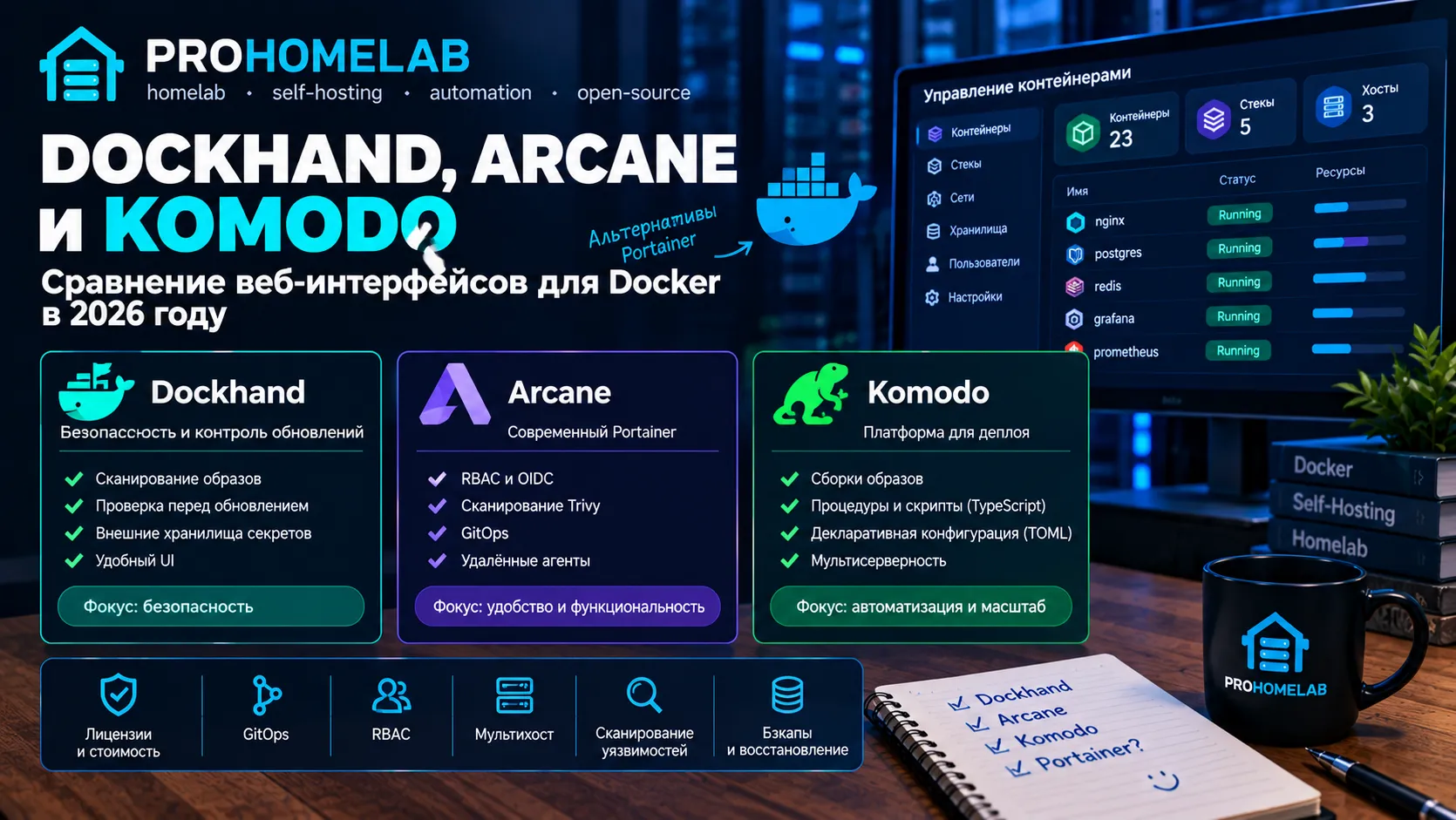
Dockhand, Arcane, and Komodo - Comparing Docker Web UIs in 2026
Three living Portainer alternatives in one article. Breaking down how Dockhand, Arcane, and Komodo differ on features, licensing, and day-to-day operation - and which scenario calls for which one.
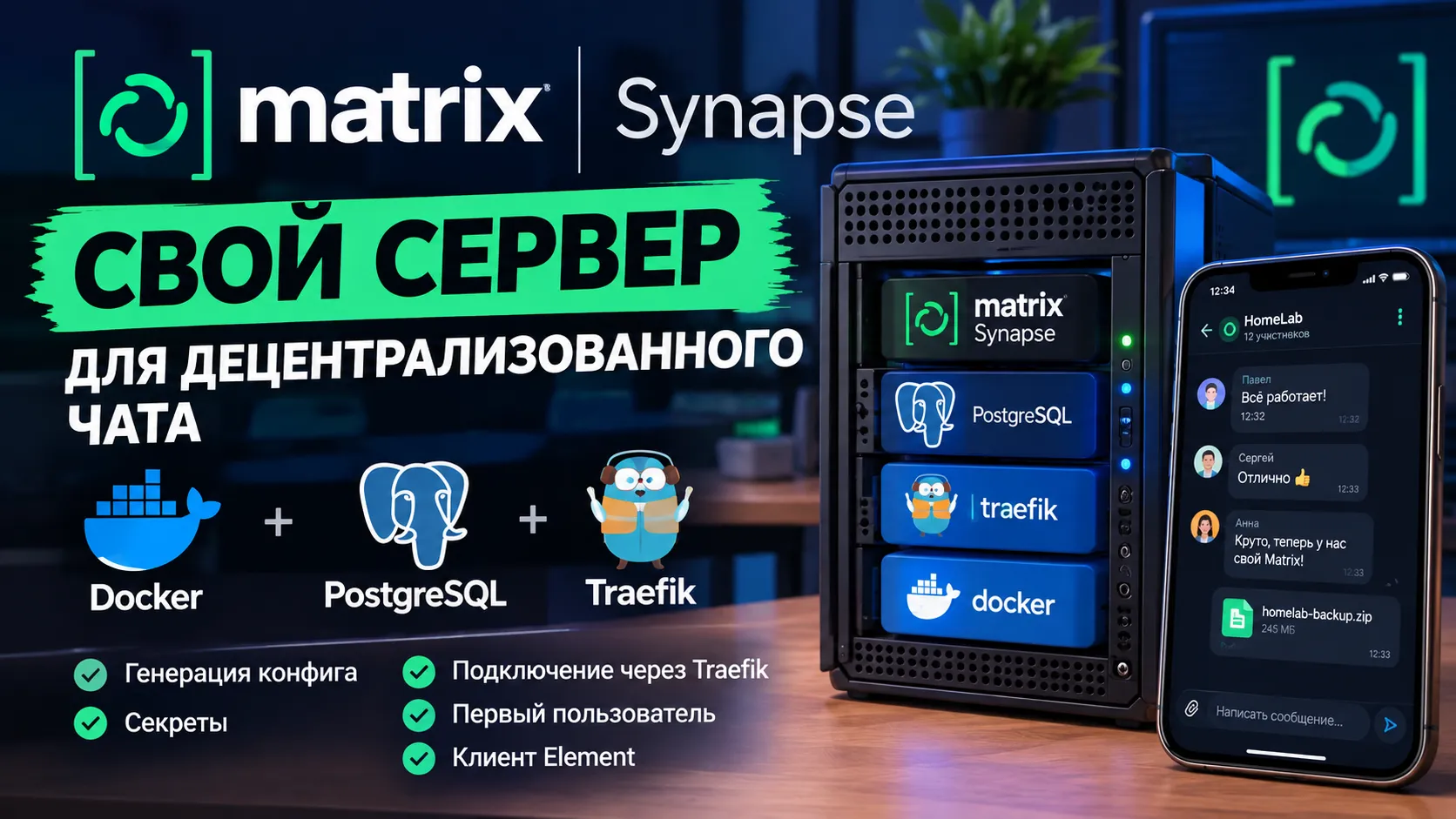
Matrix Synapse - Setting Up Your Own Server for Decentralized Chat
Deploying Matrix Synapse in Docker with PostgreSQL behind Traefik: config generation, secure secret storage, disabled open registration, creating the first user via CLI, and connecting the Element client.